Tags
000 Maniacs, 10, bosnia, Bosnia and Herzigovina, Edin Dzeko, Football, Grbavica, groundhopping, Maniacs, Oliver Šarkić, Robijaši, Sarajevo, Sports, Stadion Grbavica, Zeljeznicar, Željezničar
Friday 18th September 2026 ko 20:00
Premijer Liga BiH
FK ŽELJEZNIČAR 1 (Pejić 79)
NK ČELIK ZENICA 1 (Šarkić 56)
Masić (physio) sent off 88 (foul & abusive)
Att 10,500
Entry 15 KM (approx £6.39)
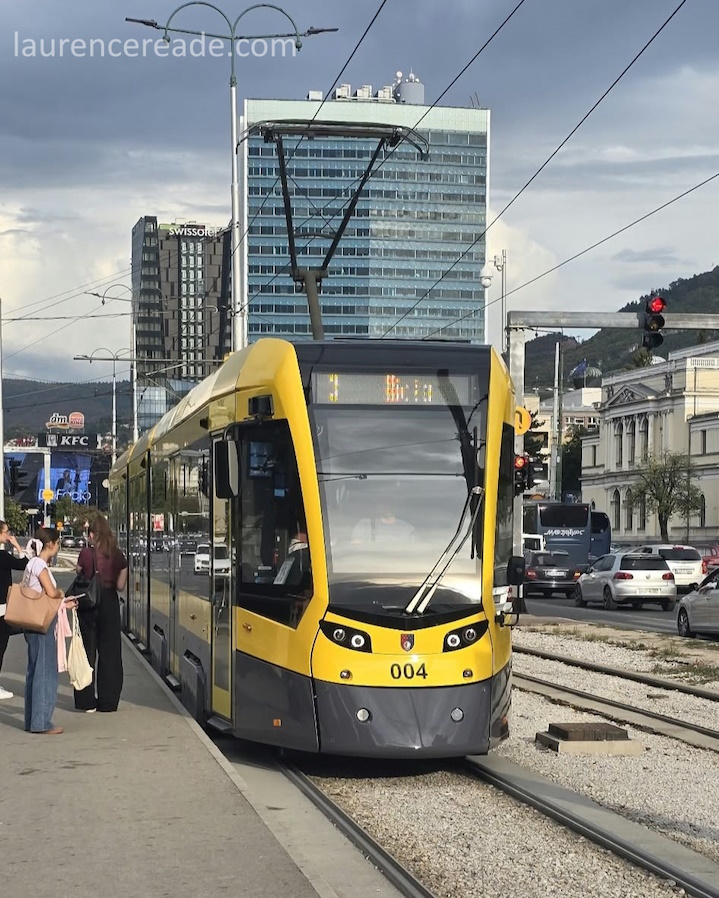
Such is the nature of Sarajevo that chances are you’ll get very well acquainted with Tram Line number 3. It runs from Ilidža in the east of the city and loops around Baščaršija (old town) in the west and runs past the Hotel Holiday Inn, the Latin Bridge and the Museum of the Siege of Sarajevo. Appropriately, and tragically in equal measure the line traces the route of “Snipers Alley” notorious during the 4 year long siege during the Bosnian War. At 2.20 KM a ride it is certainly good value and it is handy for one of Sarajevo’s most famous football clubs too!
You may recall that 12 years ago the late Peter Miles led a trip to Belgrade where we watched a team called Železničar, or to translate the team of the railwaymen. They were a small club playing on the banks of the River Sava, and their hospitality was remarkable to the extent that whenever I’m writing and need a little inspiration I look at their pennant on my wall. Sadly the club are no more; they folded in 2016 after the City of Belgrade Council turned their ground into a water park. Only the volleyball team there still exists.
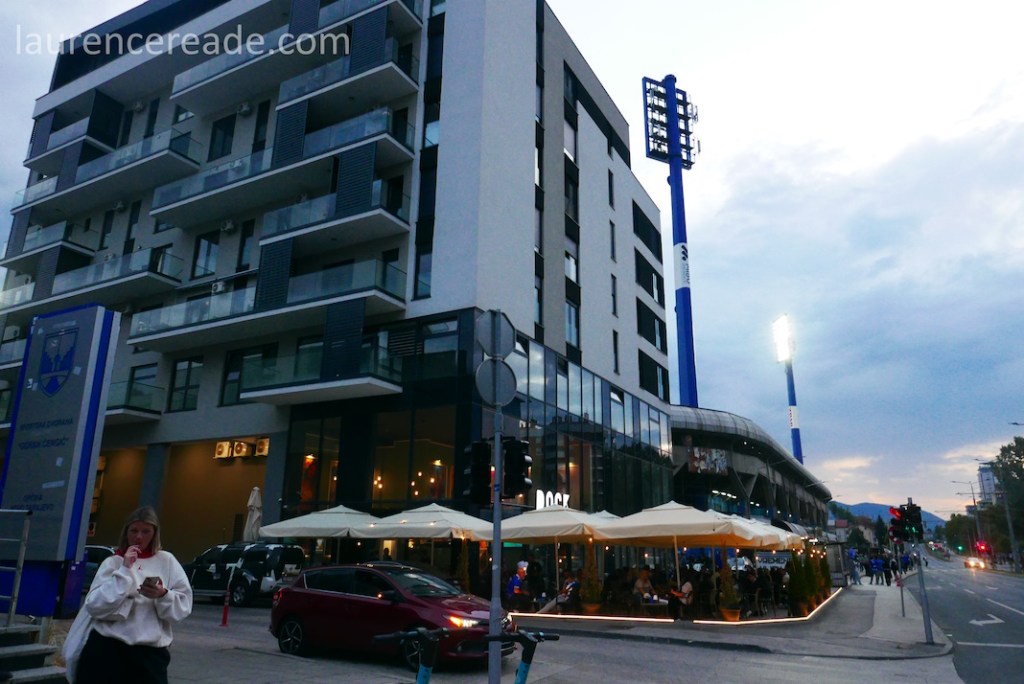
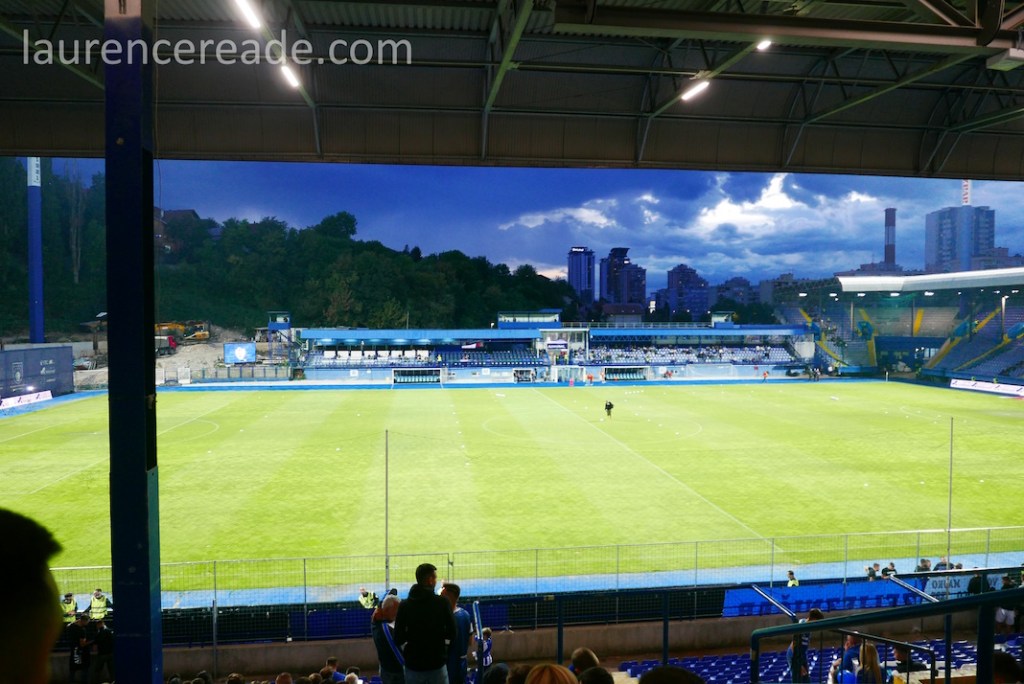
But once I got home people tended to assume the Željezničar we’d watched was the club in Sarajevo. That was entirely logical, they had won the Yugoslav League in 1971-2 and the Bosnian championship 6 times. And once Robyn and I had decided to visit Sarajevo, it was the Stadion Grbavica that was a priority for us.
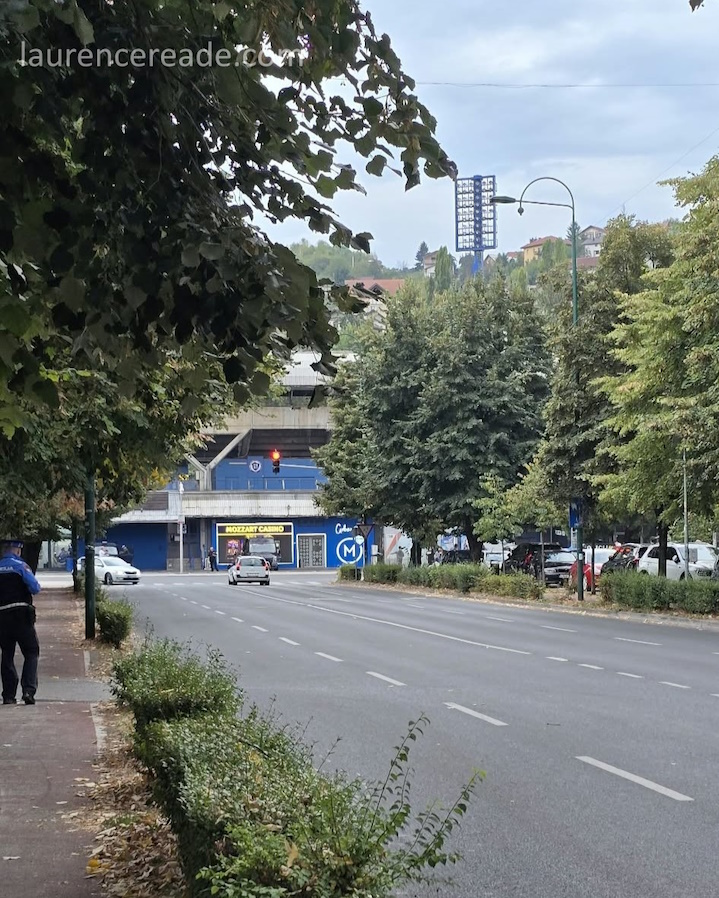
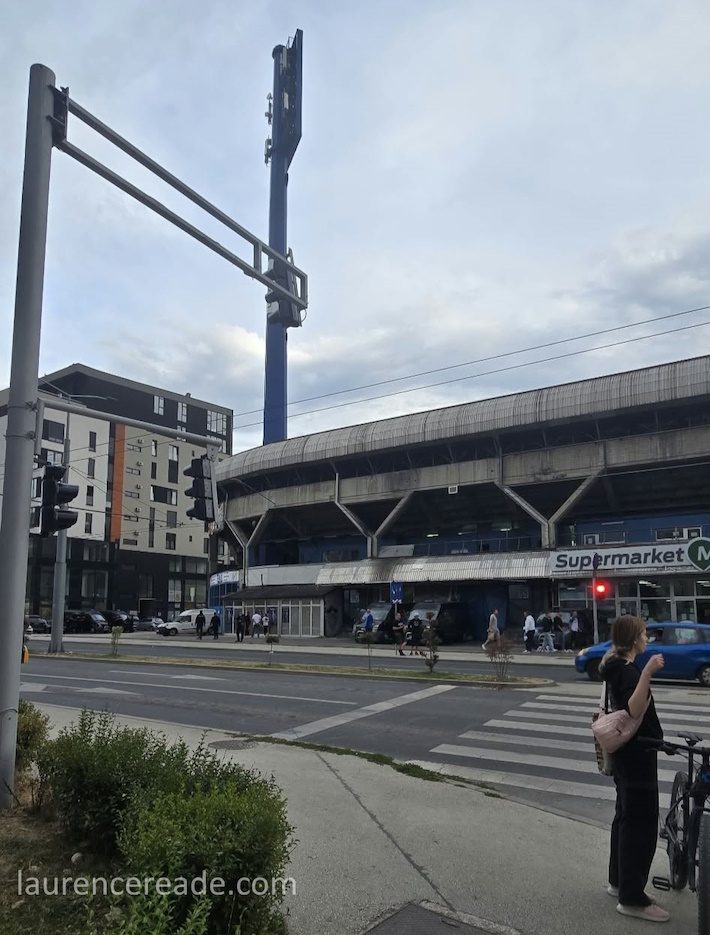
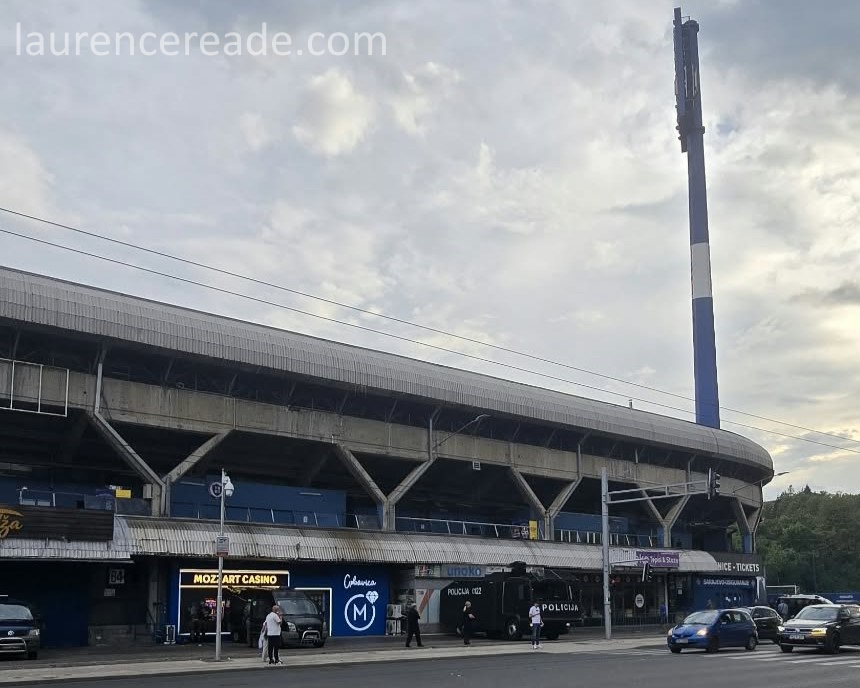
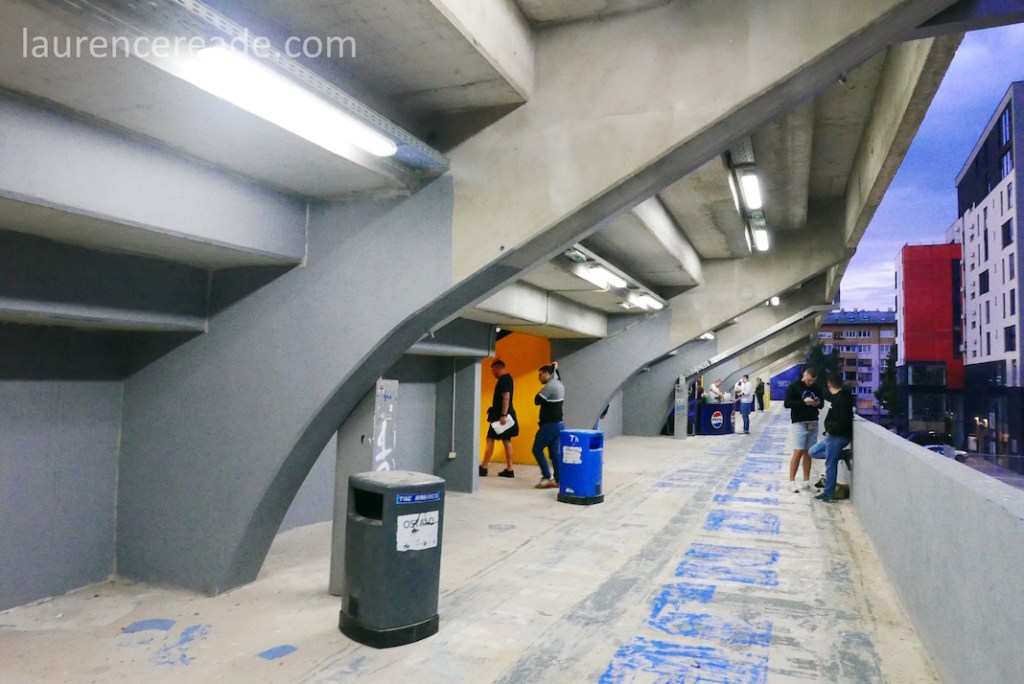
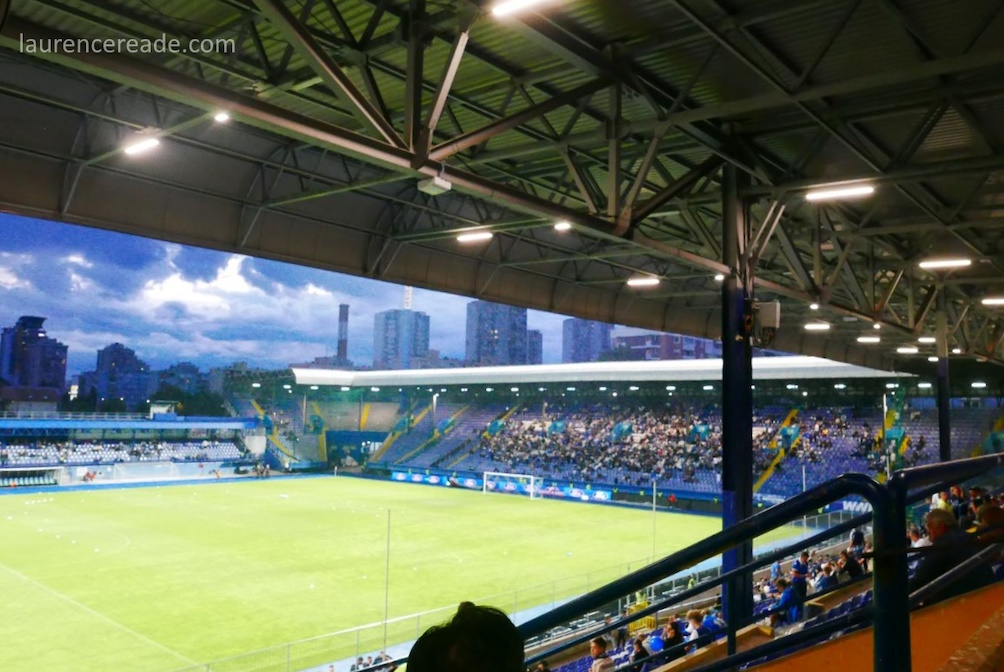
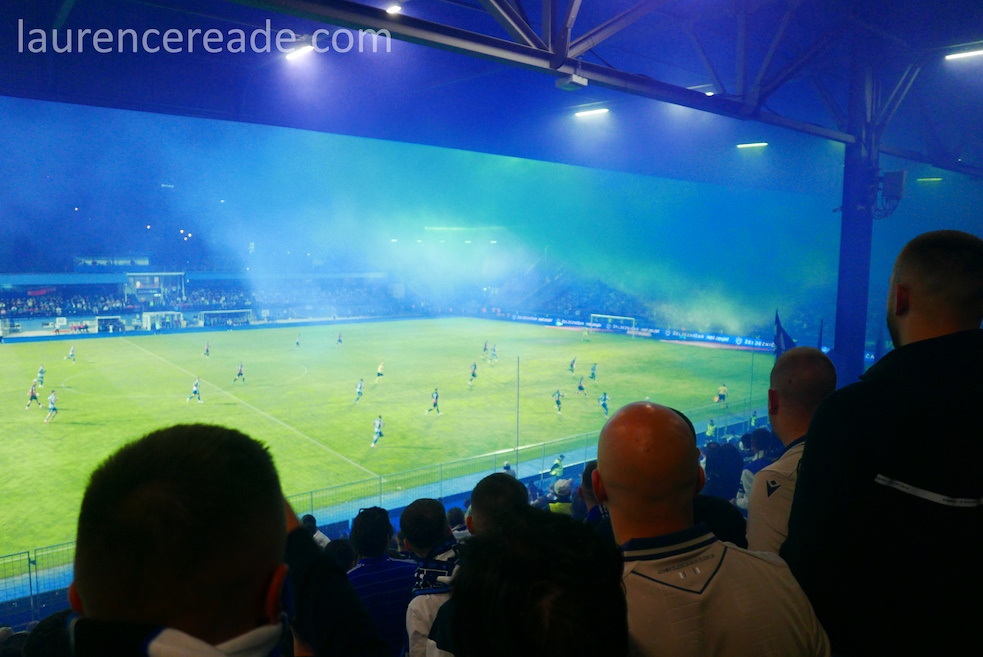
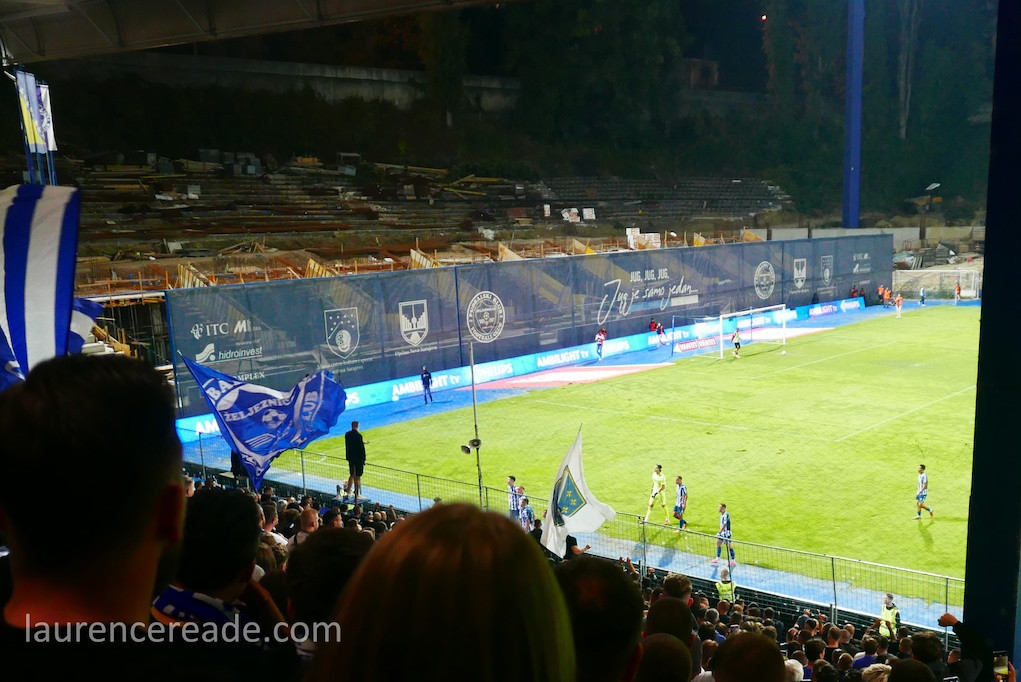
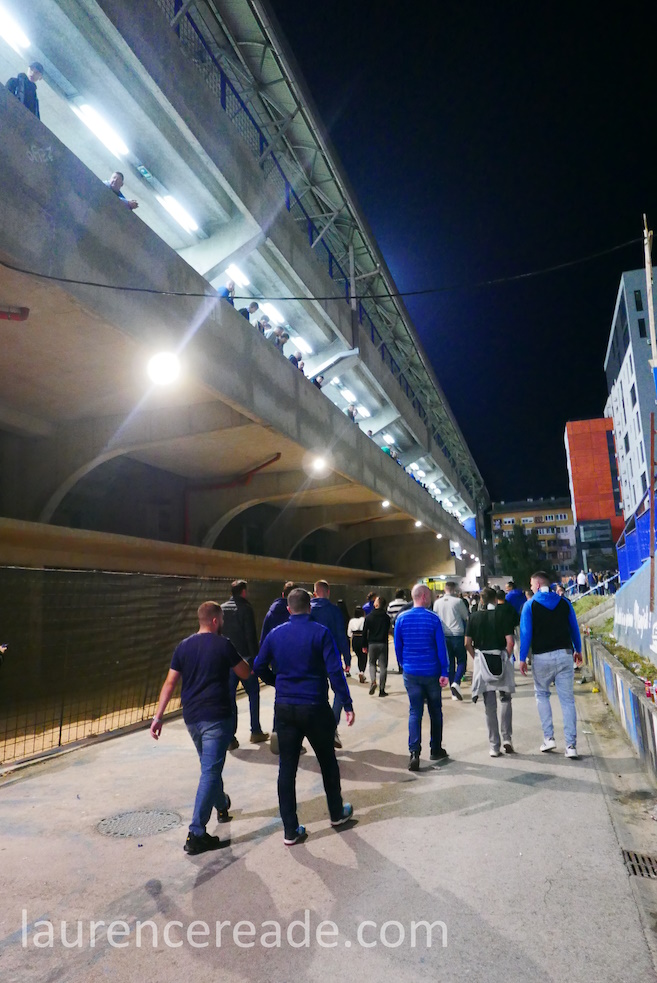
By far the simplest method of getting there is to take that 3 tram to Socijalno and walk down M5 street. The ground dates from 1953 although the ground was closed for improvements between 1968 and 1976, ironically that Yugoslav title in 1972 was won with the club playing at the Olympic Stadium.
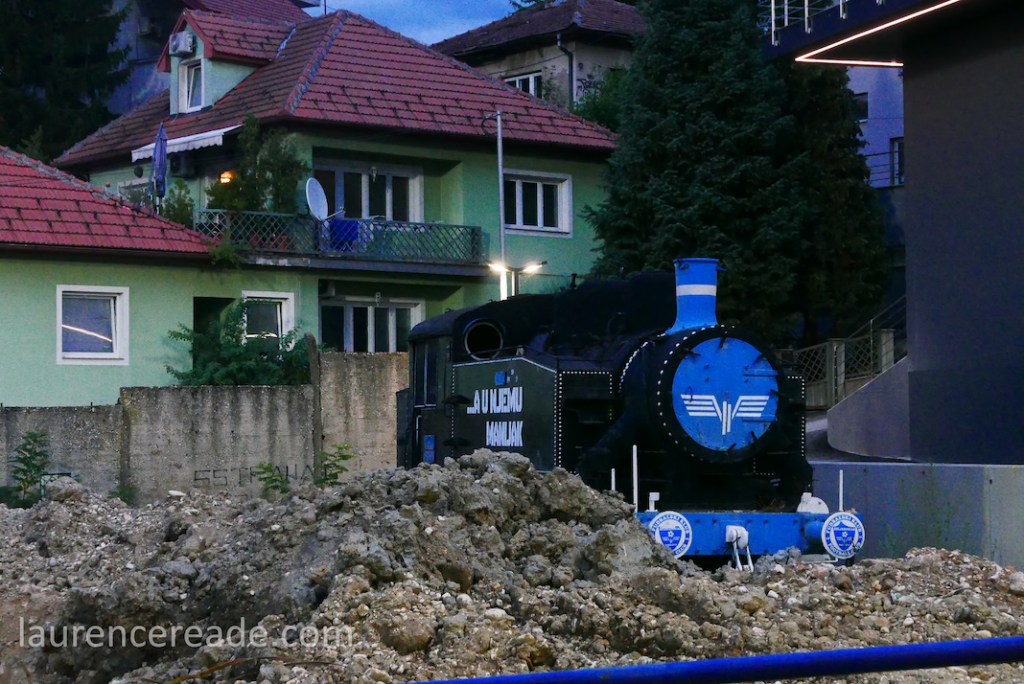
The club dates from 1921 being formed by a group of railway workers. They were unusual as clubs then tended to be backed by organizations, mostly on an ethnic basis, wheras Željezničar were open to all but with no financial backer. They soon learned to fundraise through dance nights and the like to keep their heads above water. During Communism the club were elected into the Yugoslav top flight but were found guilty of match-fixing in 1965 after Željo goalkeeper Ranko Planinić admitted the club had been bribed to throw matches against relegation-threatened Hajduk and Trešnjevka two seasons earlier. The aftermath saw two players receive life bans along with various members of senior management too.
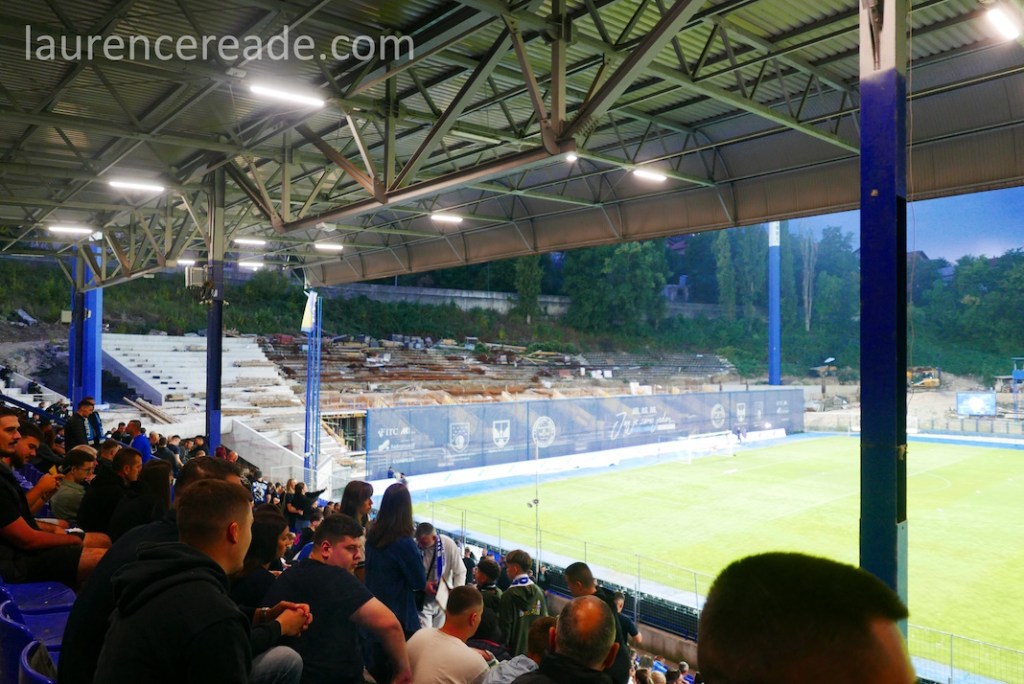
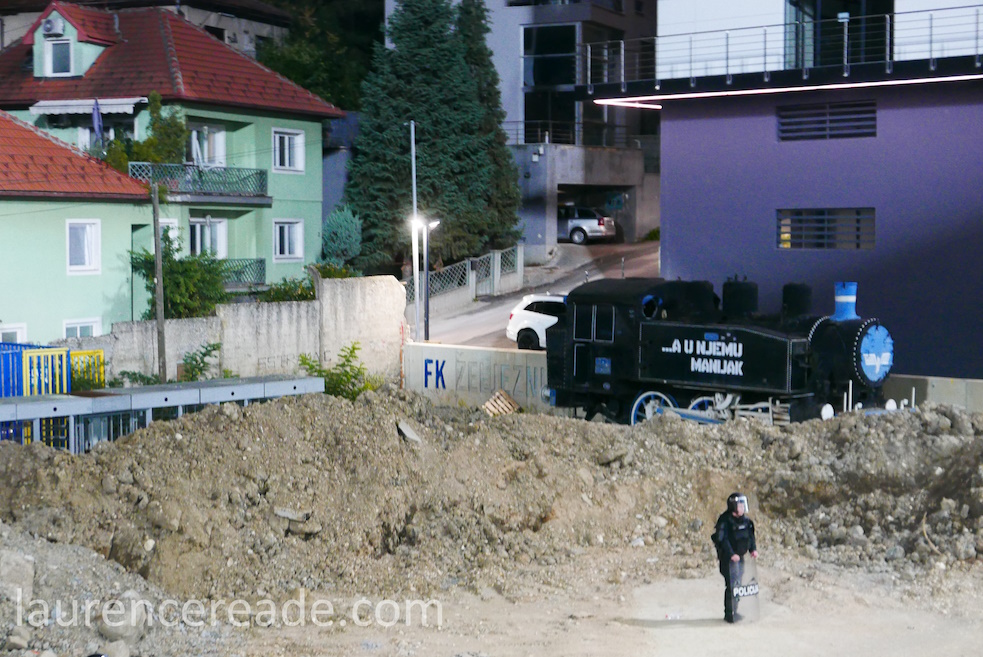
During the Bosnian war 1992-6 the stadium was in the front line and sustained heavy damage with the loss of the wooden west stand, and much of the club’s documentation. We’d visited Vojkovici in the Republika Srpska two days earlier and that had shown us just how close the the border had been between the warring factions with the Grbavica literally on the edge of the mountains that were controlled by the Serb forces. It had been clear to us just how valuable our trip to the Republika Srpska had been, even though the distances involved weren’t great.
During this time through peace held in Sarajevo for Željezničar to play in the first Bosnian championships in 1994-5 . The club won first place in one of the qualifying tournaments, held at the Grbavica during one of the rare “truces” signed. The finals took place in Zenica, and although they finished 4th out of four, the victory was simply being there.
Once peace arrived, the club were able to rebuild, both on and off the field. The entire Grbavica district was repopulated in March 1996 and the club finally got its stadium back. It was virtually destroyed, overgrown, covered in shell remains, and on one side even in contact with a mined area. Nevertheless on May 2 1996, the club played its first game back; fittingly it was against their great rivals FK Sarajevo.
Any history of Željezničar has to mention not only their most famous son, but also the most successful Bosnian player in modern times. Edin Džeko played at the Grbavica in 2003-5 before a stellar career at the likes of Manchester City, Roma, and Inter Milan. It needs to be pointed out that here he was played as a midfielder, rather unsuccessfully it seems. He was sold to Czech side Teplice with Željezničar accepting a bid of just €25,000 with a Željezničar director saying later, “(we) thought we won the lottery” It seemed fitting that while we were in Sarajevo the great man was preparing to play his 152nd and final game for his country.
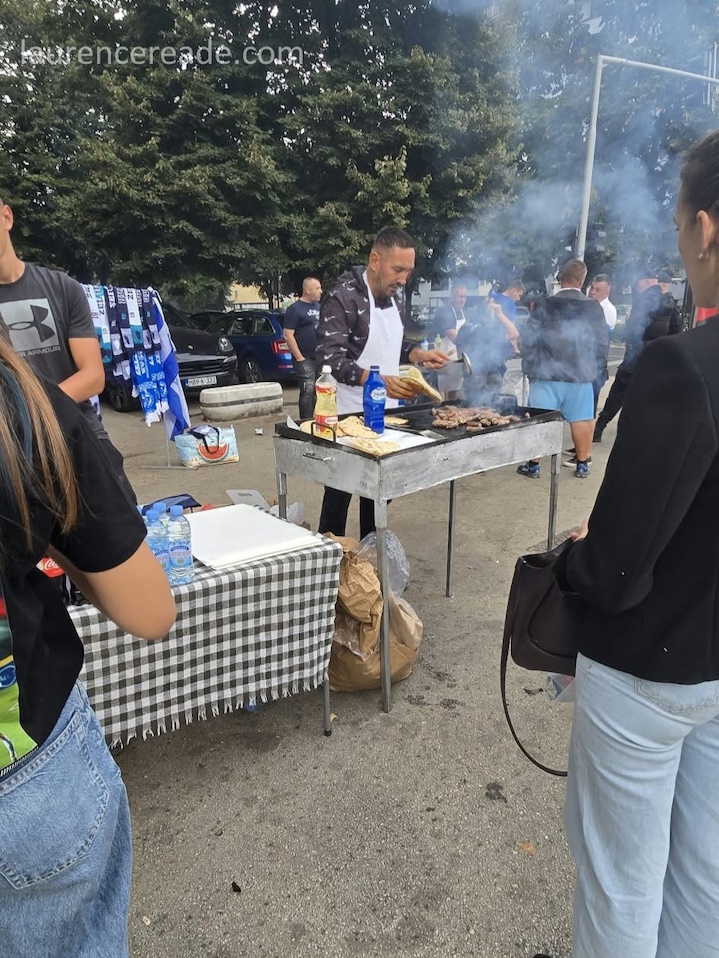
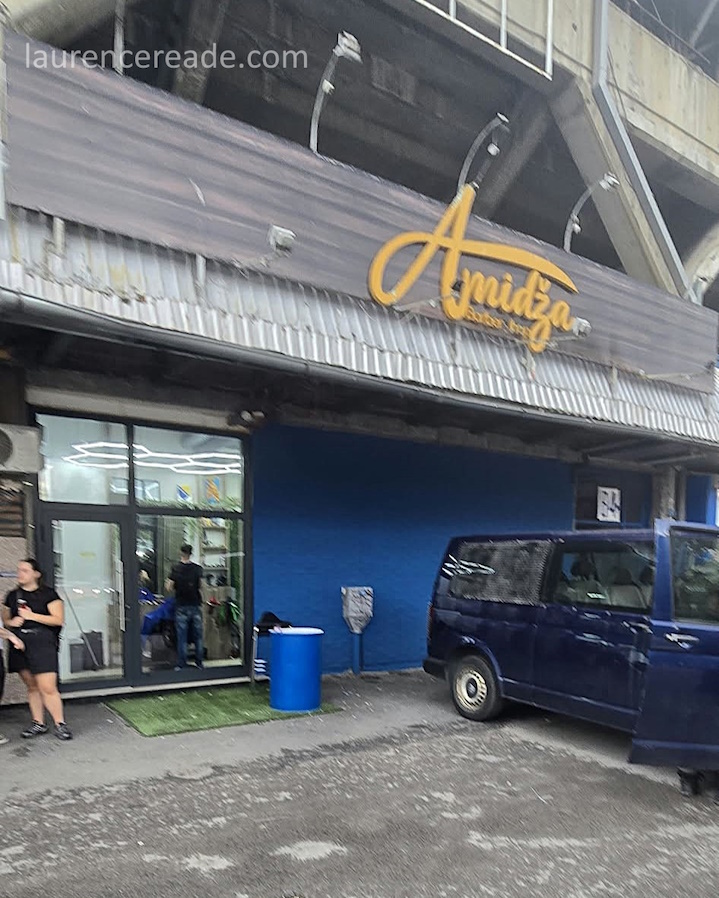
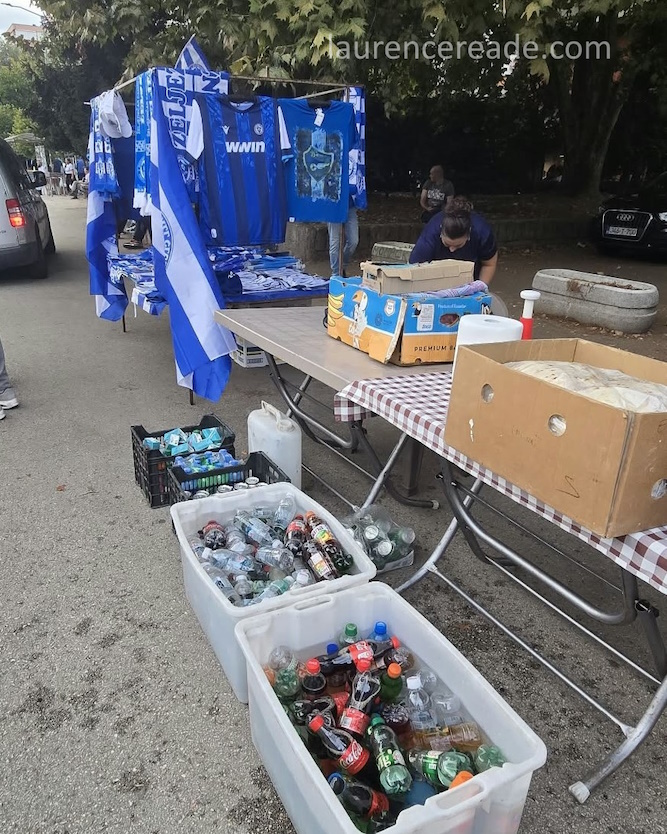
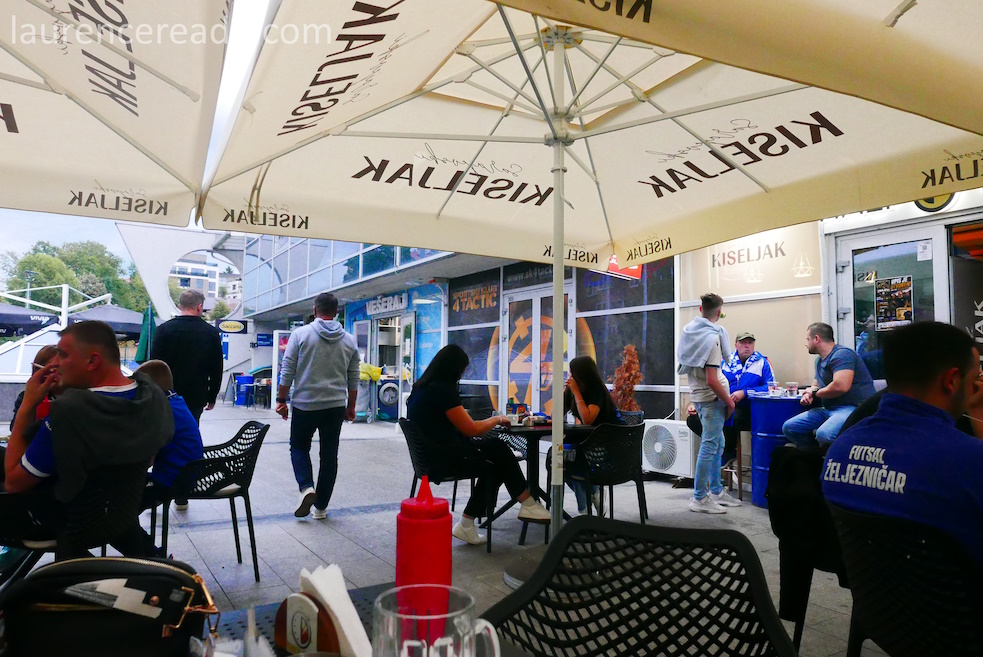
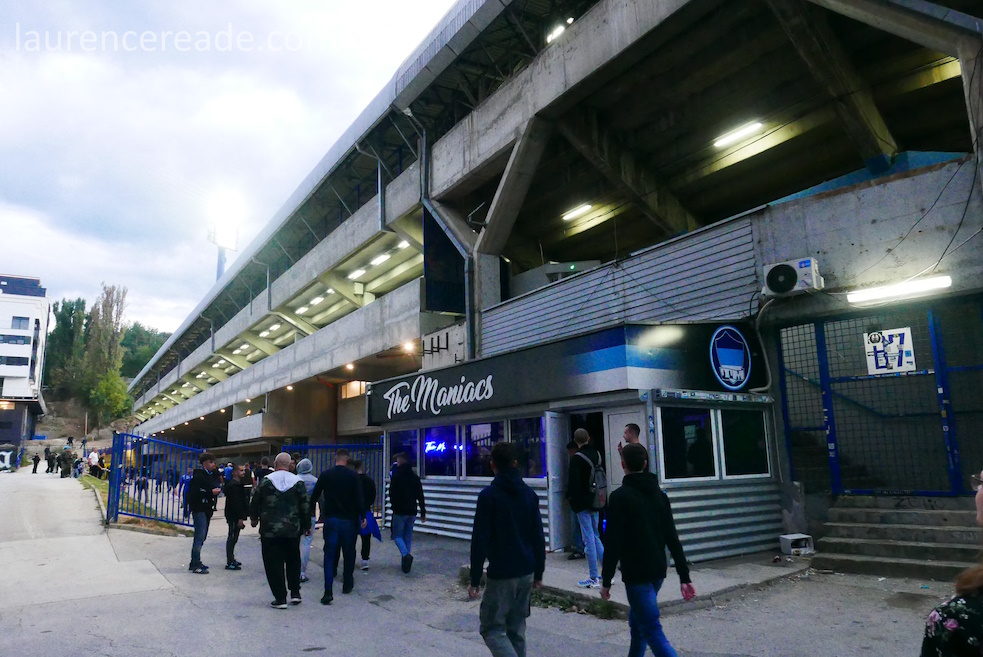
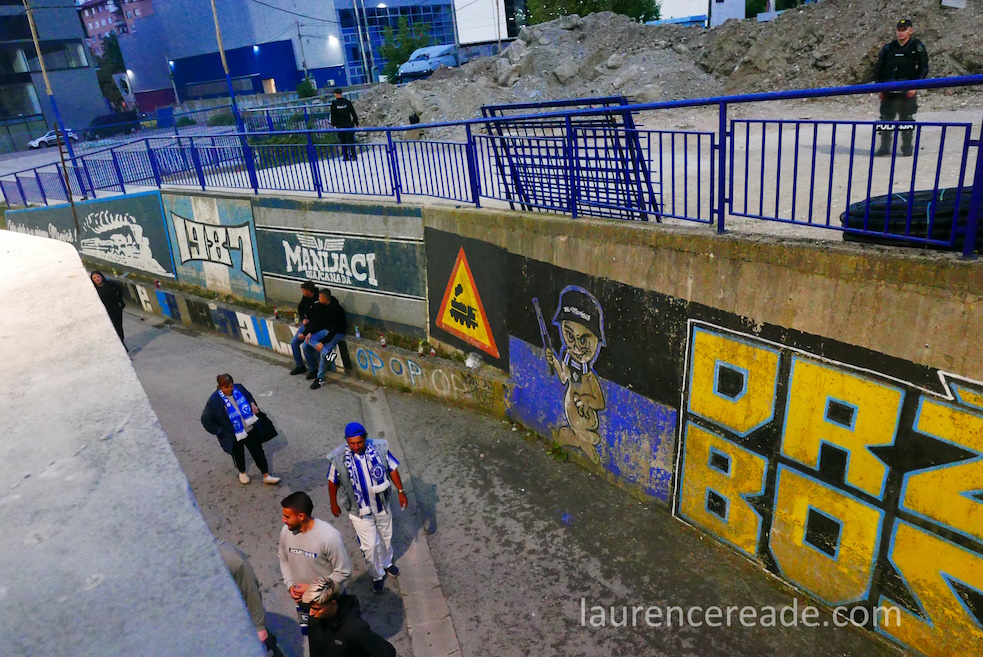
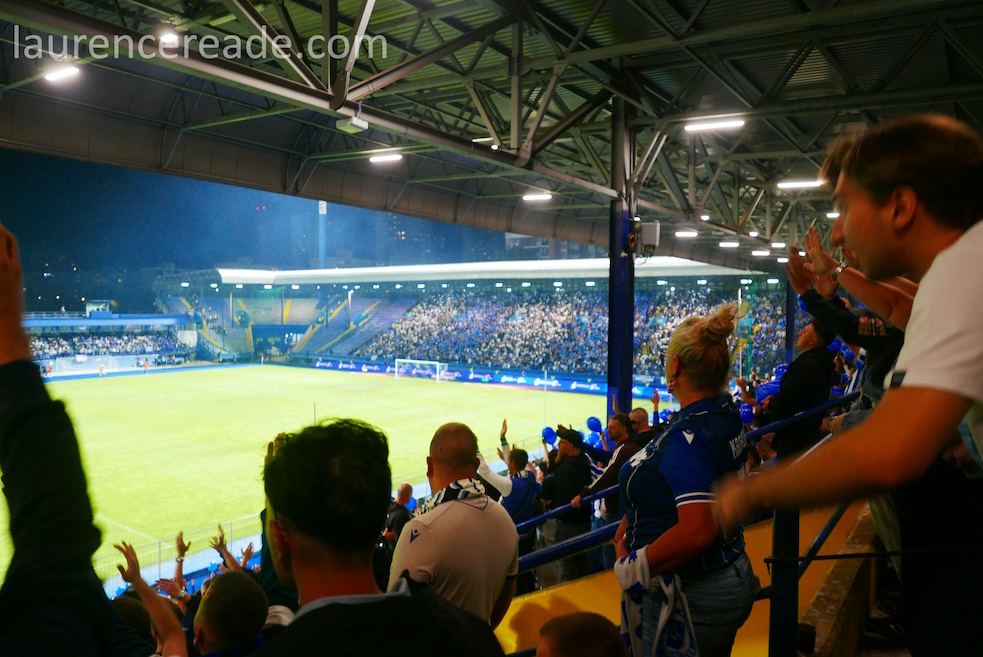
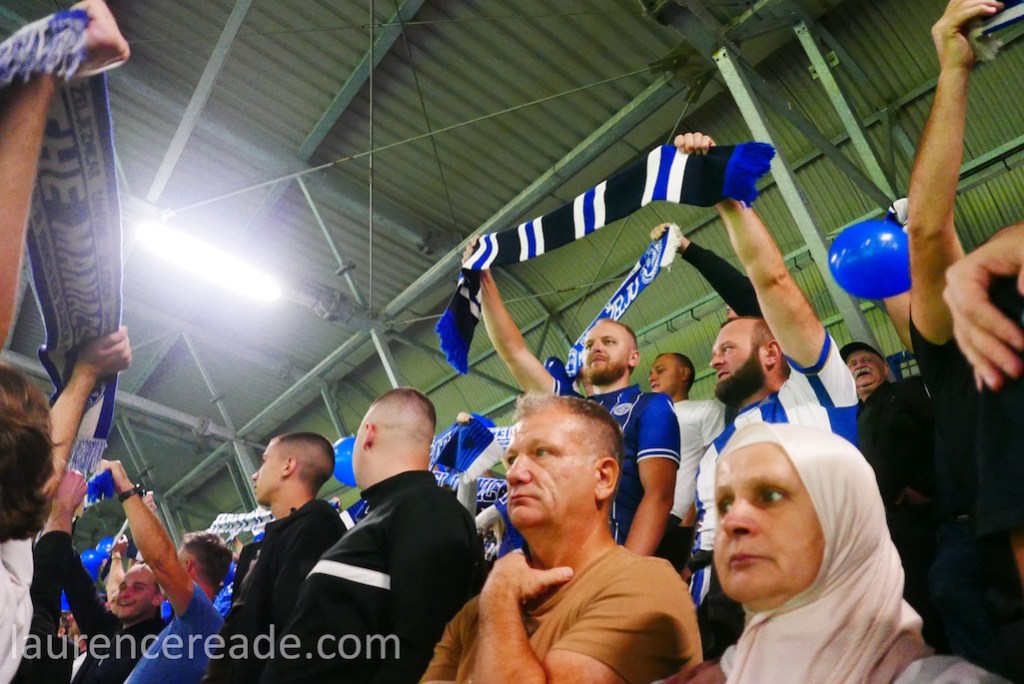
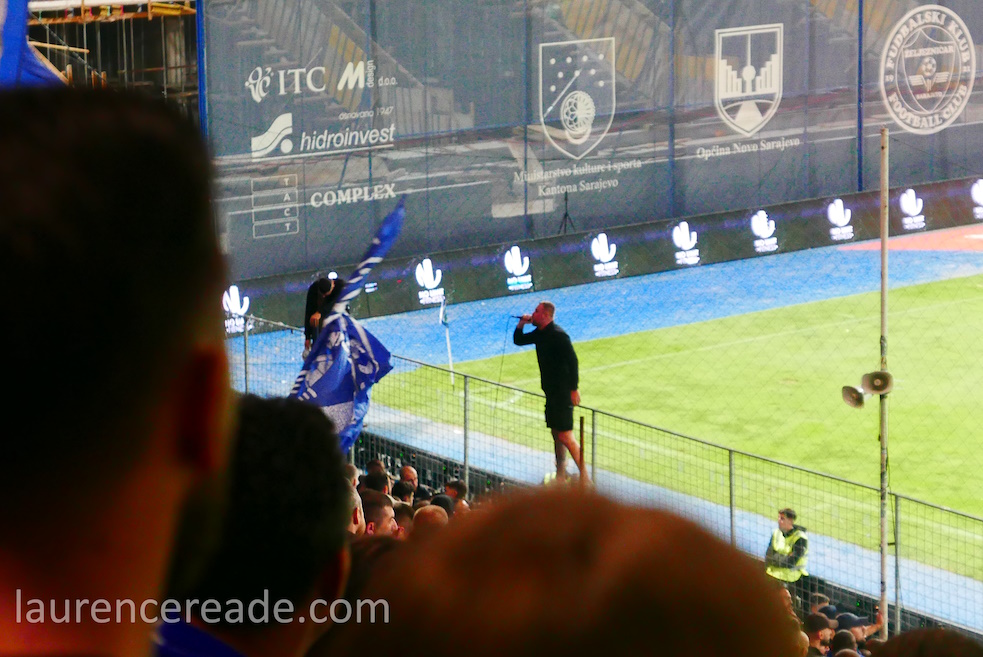
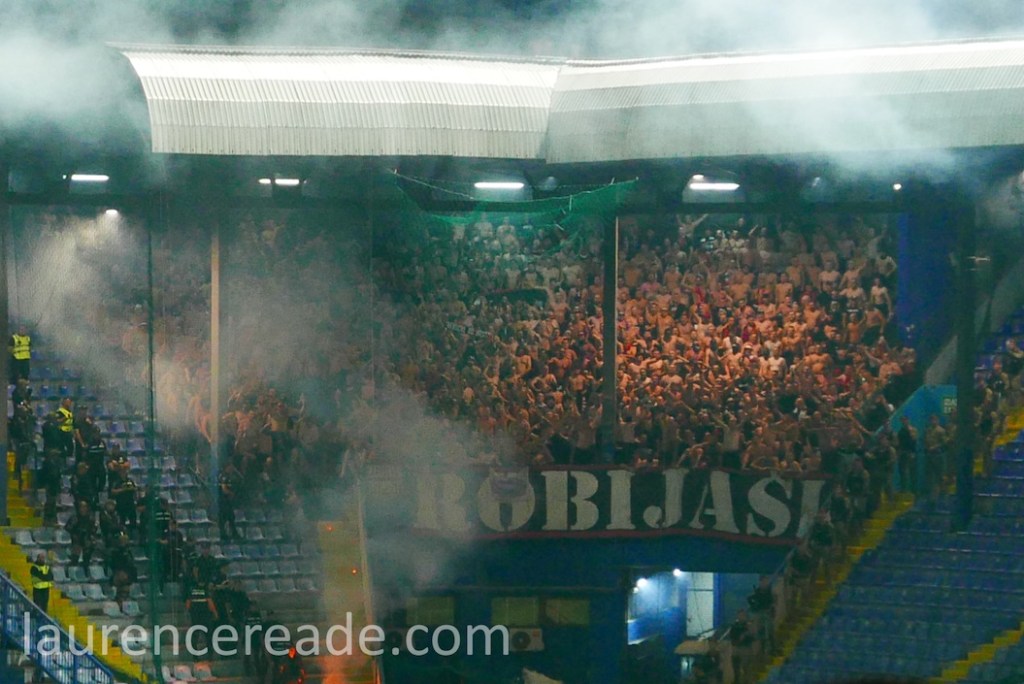
I’d spotted that the club were going to be celebrating their 105th anniversary and so wondered how easy tickets might be to come be? I emailed the club who advised to simply turn up on match day and buy from the ticket office. I was nervous enough to get there early and true to their word it was easy to buy two tickets for the East stand, and go for a pizza nearby. There was one small issue though, the East Stand is where you find the Maniacs. I’d called in at their shop at the stadium corner, and it has to be said their merchandise operation was better organised than the clubs!
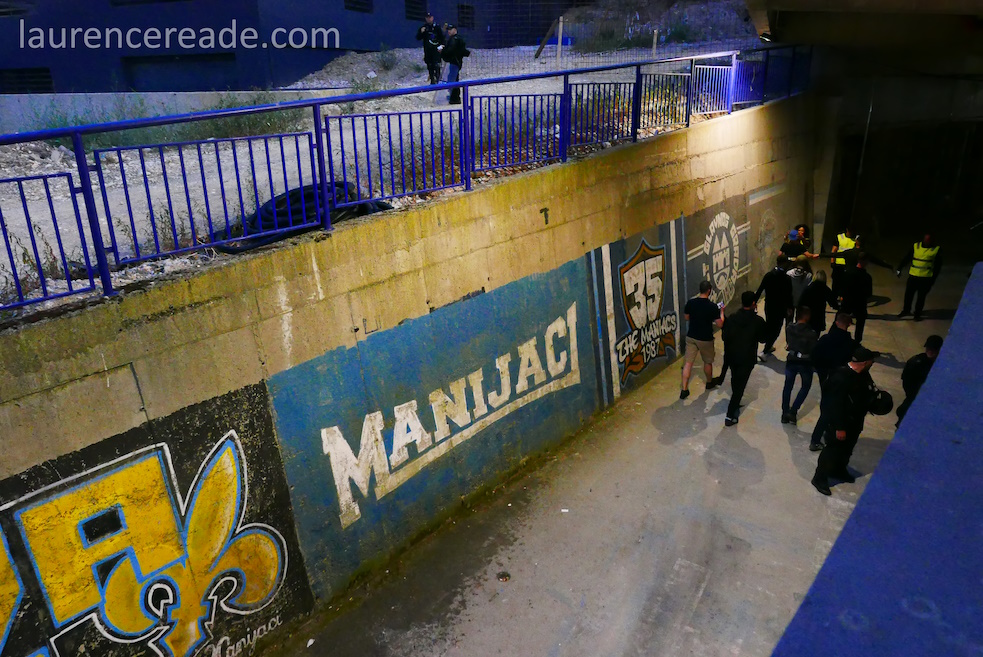
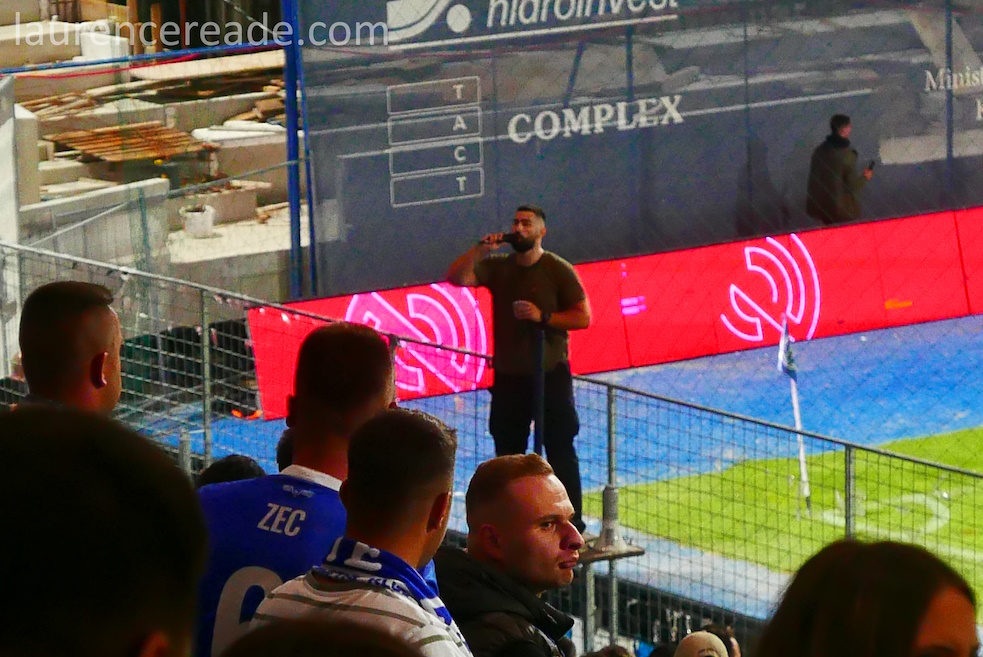
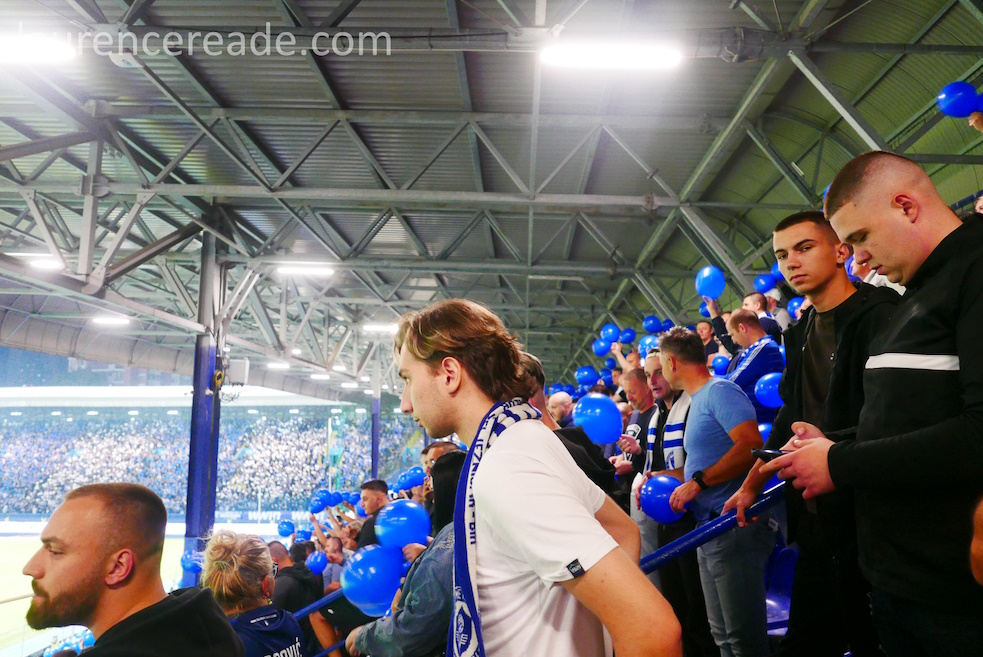
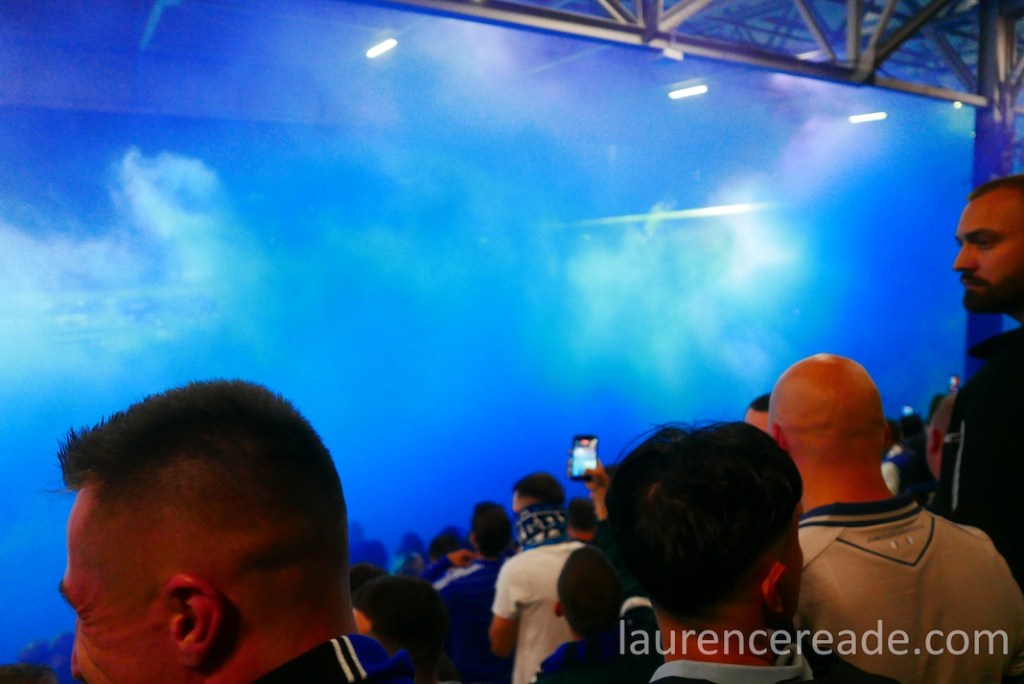
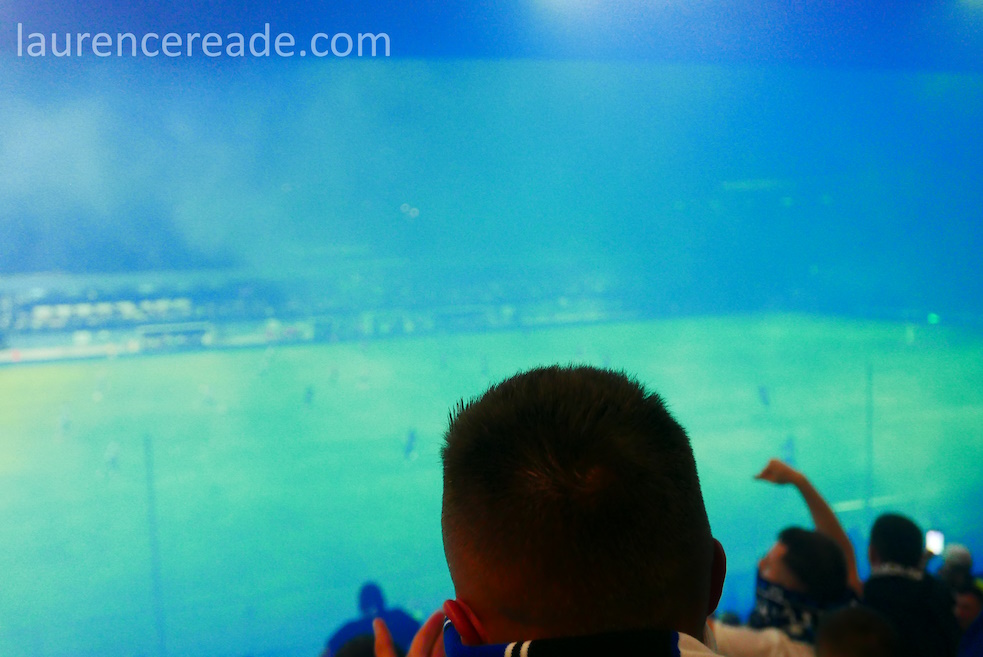
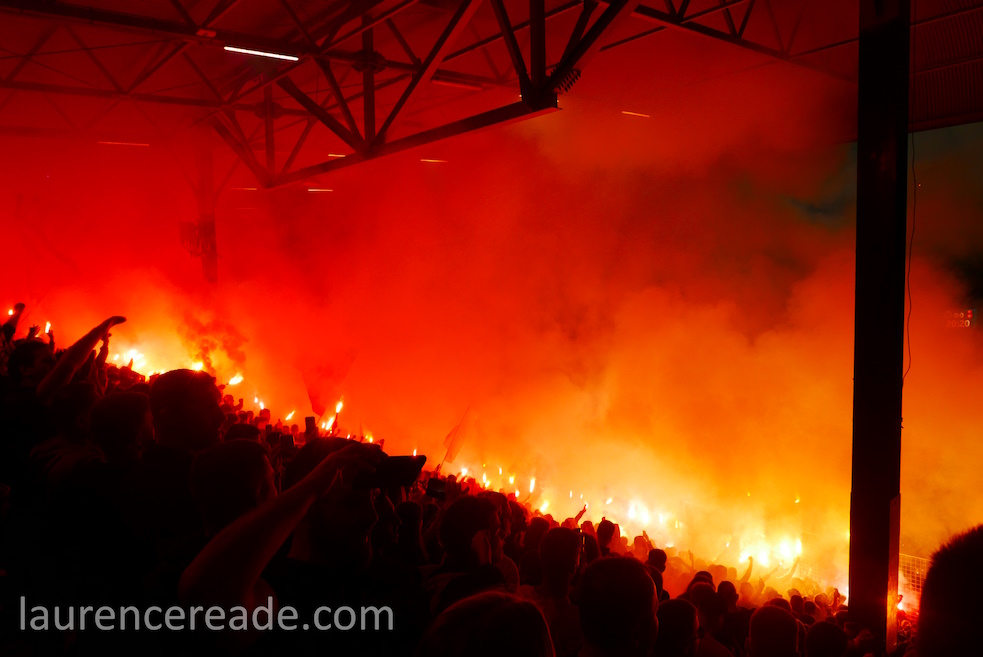
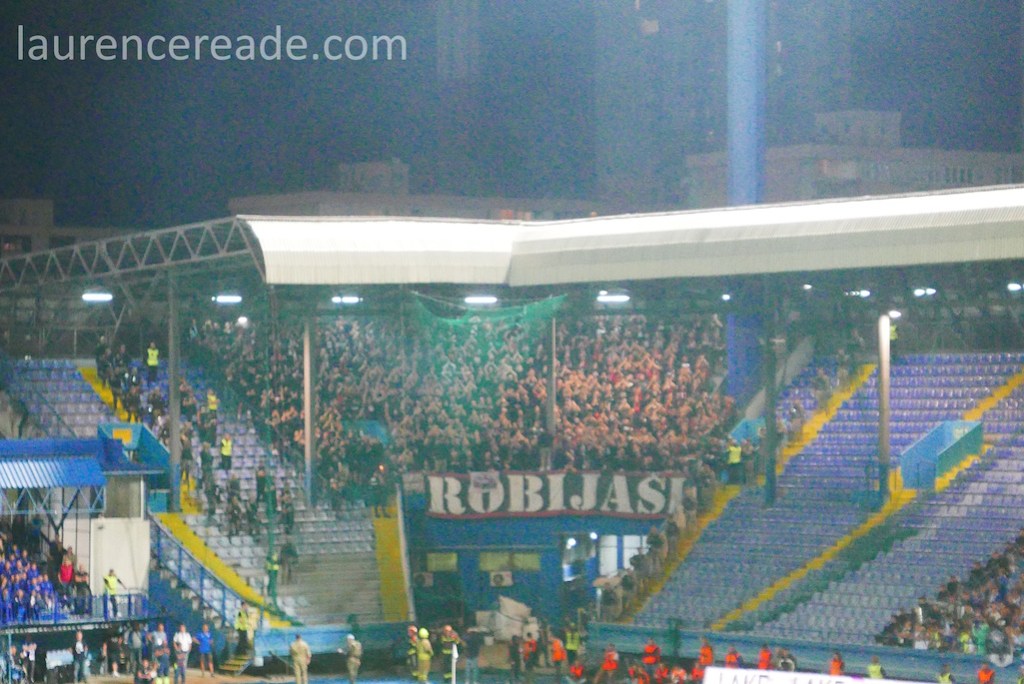
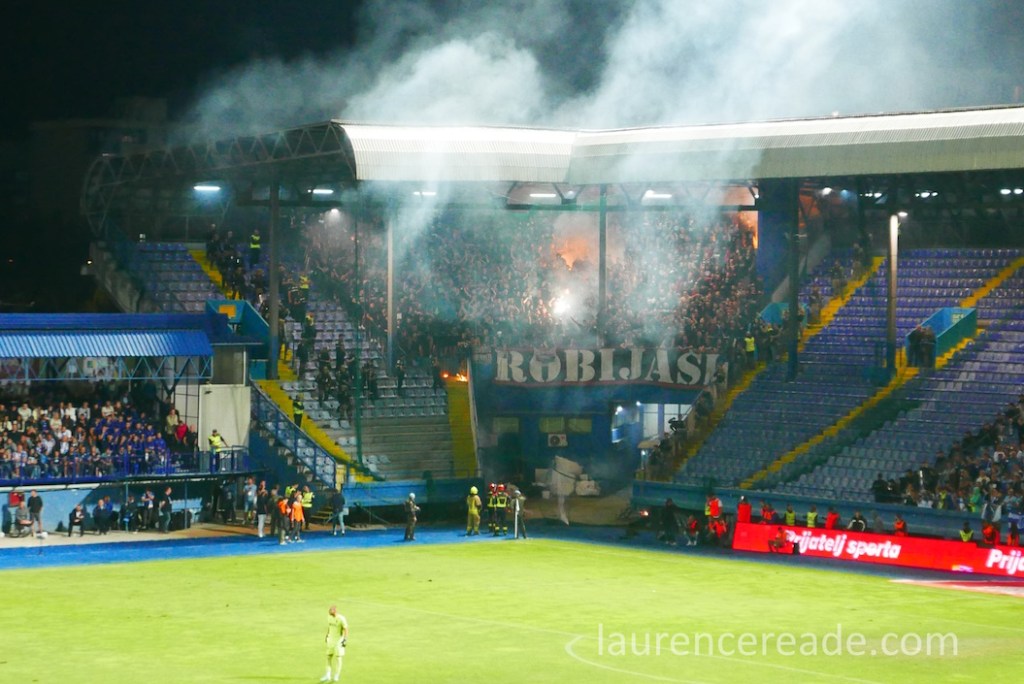
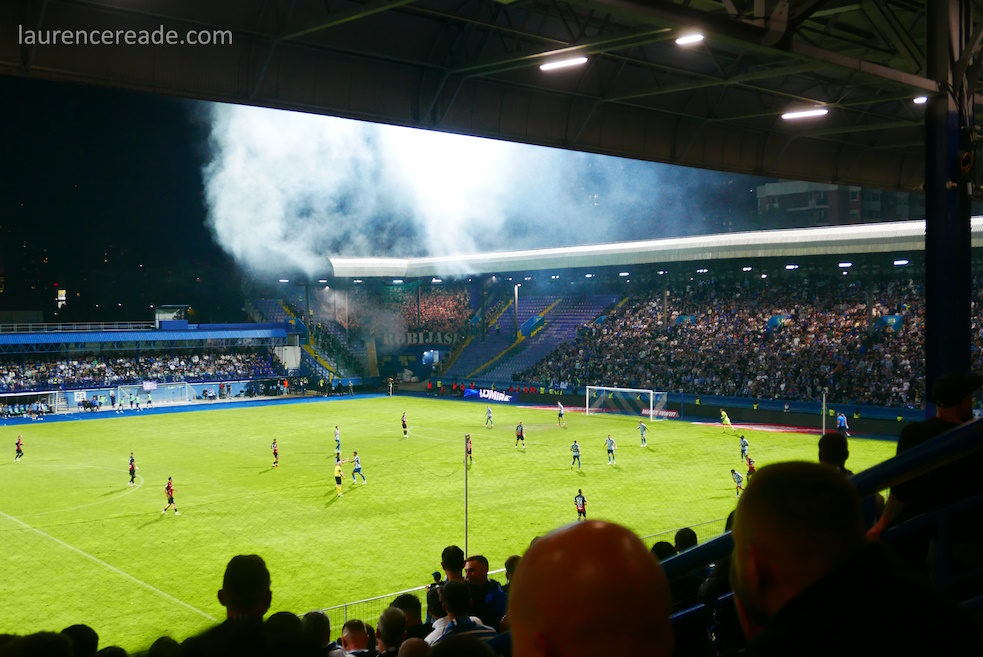
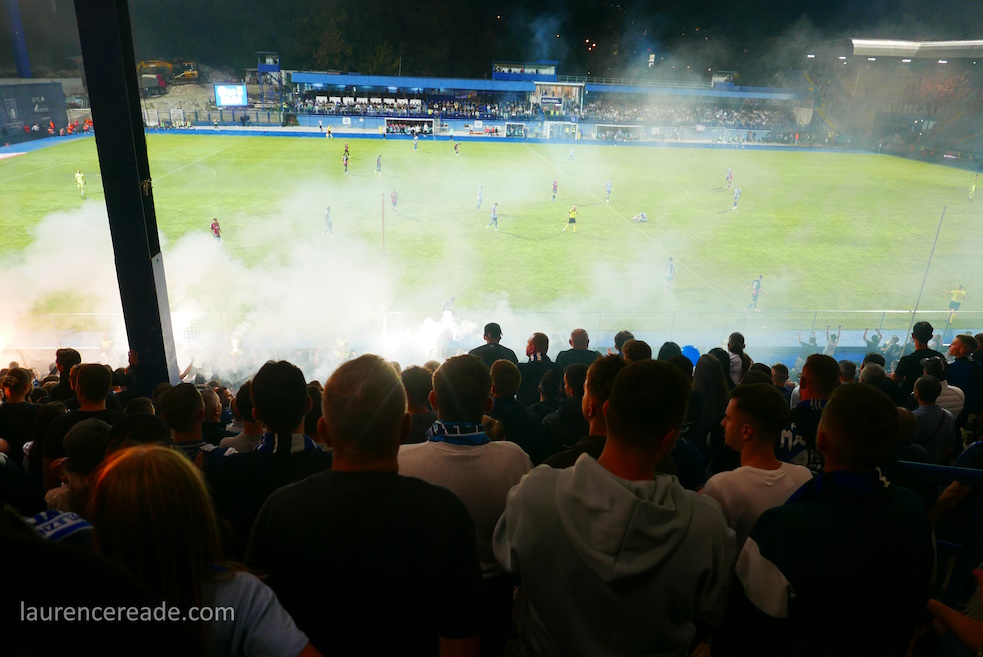
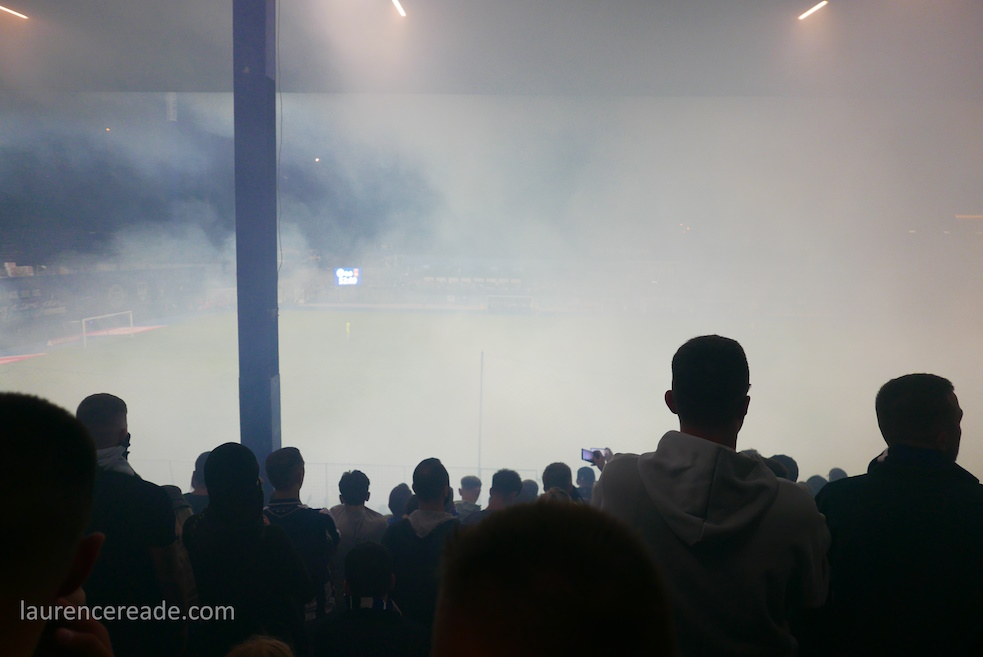
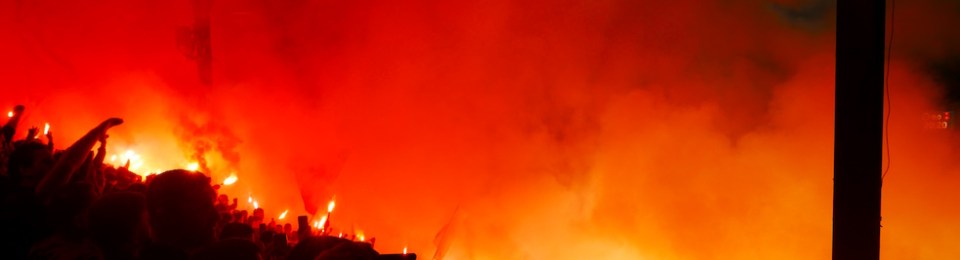
I’ve experienced Balkan Ultras before, and little or nothing is more intense than a Belgrade Derby although the Maniacs and the away Robijaši (Convicts, there’s a famous prison in Zenica) gave it a real go! It was Robyn’s first taste of being in the middle of it all, and she did take time to get used to it. I glanced behind and there was a Muslim couple quietly watching proceedings, it seemed a metaphor for how people have learned to live together in modern Sarajevo despite its troubled past.
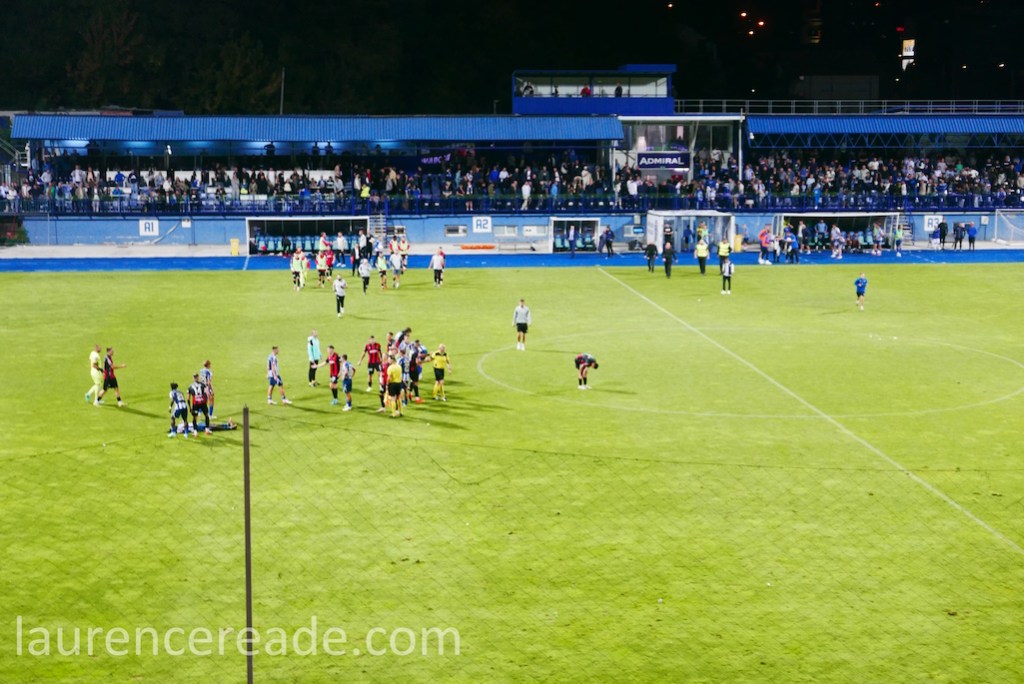
The teams slugged out an entertaining encounter, the away physio collected a red card for words uttered to the referee, as the clubs played out an draw that was fair on the balance of play. It was only later that I found out that Zenica goalscorer Oliver Šarkić, a Montenigrin was born in Grimsby, his father was ambassador to the UK at the time. His twin brother Matija played for Millwall, before tragically dying aged only 26 in 2024.
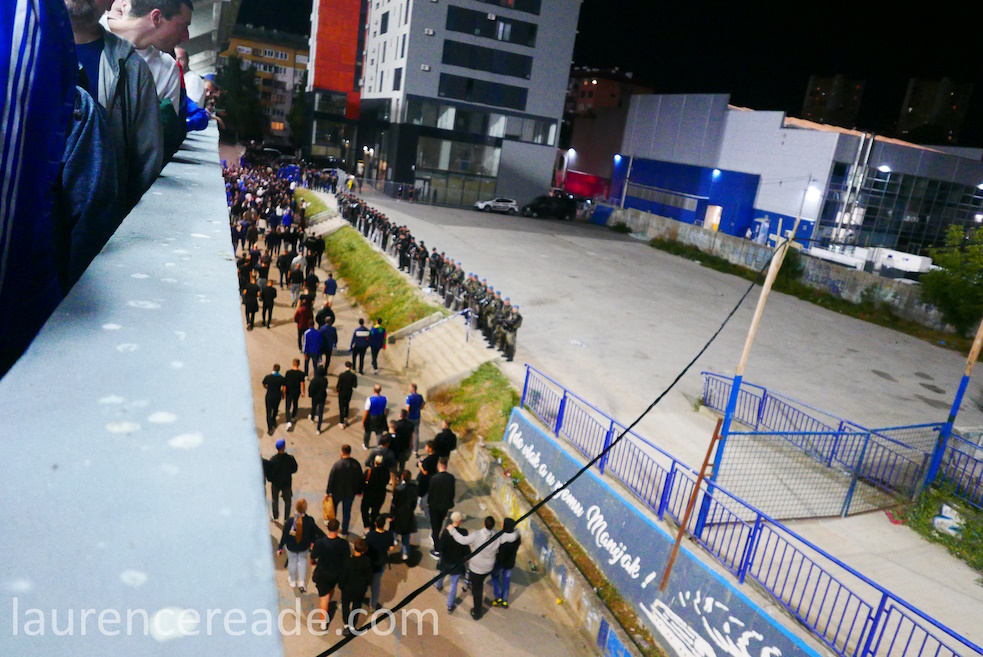
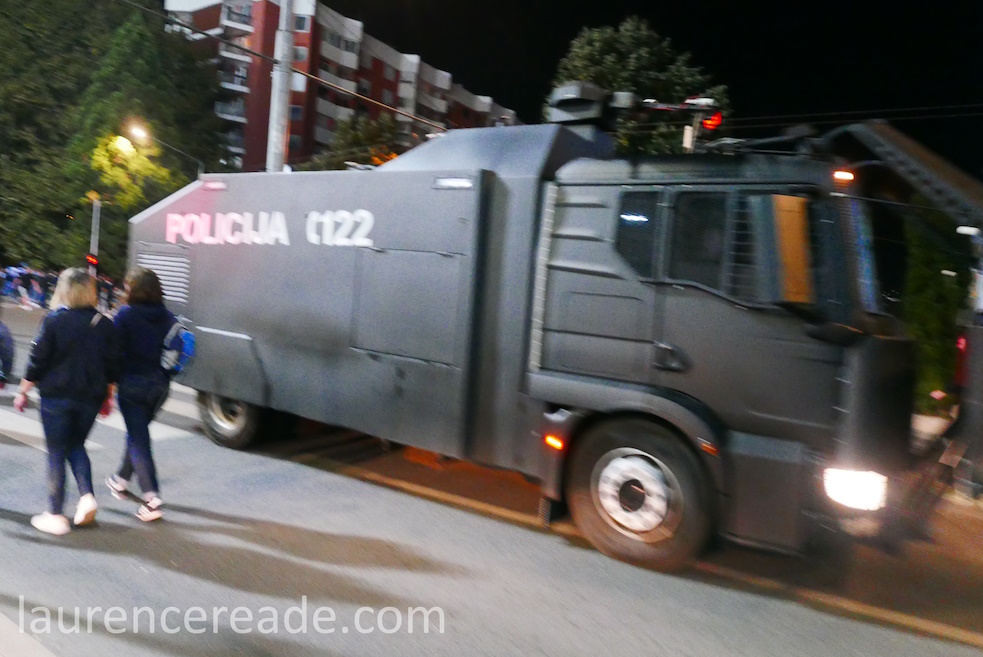
We were held in the stand after the final whistle, no bad thing as it did mean that we were able to get on the first tram heading back to the Holiday Inn. We did take a little time to reflect on what we’d witnessed but eventually I found myself thinking back to that waterpark in Belgrade. While the politics of this part of the world will probably always be complicated it was lovely to close my own personal circle.