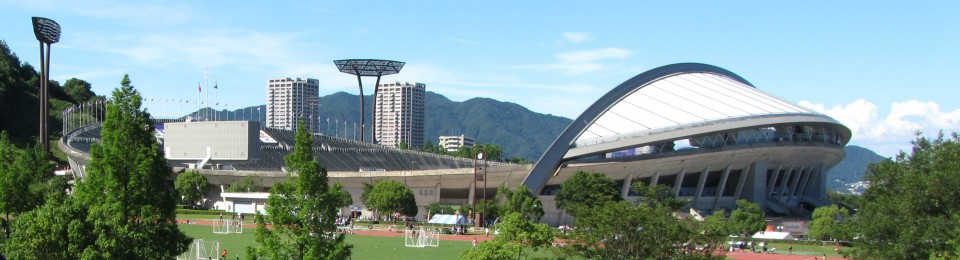
It did seem strange seeing a Western League game in the historical capital of Wessex although the location does lend itself better to the club’s current league!
The town is best known for the castle built by Walter Raleigh in the 16th century, and Sherborne School, one of the top independent schools in Britain, boasting alumni, including Alan Turing, Jeremy Irons, Chris Martin (of Coldplay fame) and John le Carré.
The town’s football ground Raleigh Grove is a nod to the famous former resident. It lies just out of town, on the south side, as part of a larger complex, Terrace Fields which includes two cricket pitches. As I arrived a group of horse boxes were leaving, and at first glance I wondered whether I’d arrived at a late postponement. The club admitted that earlier in the day a postponement looked inevitable, heavy rain had left the pitch underwater. The formality of a pitch inspection was organised for 3pm, but there was warm sun, and strong wind and the pitch wasn’t just fit for play, it played perfectly.
If ever the maxim that “Stadia do not make clubs, people do,” was the case this was the prime example. I had a chat with both clubs’ officials before kick off and each and every one was a joy to deal with, a real credit to their respective clubs, the Western League and football in general. I found time to try the club’s delicacy Continue reading →
SOUTH NORMANTON ATHLETIC 2 (Mottershead 35 Fretwell 62)
HUCKNALL TOWN 0
Att 82
Entry £3
Programme £1
Lees Lane is one of those grounds that circumstances have led me to fail to visit. I like many others visited much of the CMFL during the years of their organised groundhops, but I found myself watching Newry City during their groundhop game. That was something that needed rectifying, I’d heard good things about the club and the ground. Continue reading →
I suppose the first question for me to answer is which Sutton? Its Sutton-at-Hone, a village 2 miles (3 km) south of Dartford in Kent, and should not be confused with the London borough of Sutton of Sutton United fame far to the west. This is the Sutton of the Knights Hospitaller of the Order of Saint John of Jerusalem. The humanitarian order was set up in the Middle Ages to provide assistance for sick of injured pilgrims in the Holy Land. The base in Sutton was established in 1199 and the building is now a National Trust property.
Except, at no point was I actually in Sutton! With the introduction of the Kent Invicta League the club realised that their home at The Roaches Recreation Ground, was never going to fulfil ground grading requirements so the club moved 2 and a half miles across the M25 to Lower Road, Hextable, a village I managed to misspell twice as Huxtable! Clearly the Cosby Show was more of an influence than I thought!
Its tucked away near the end of the lane, so much so I could have easily turned round, thinking I’d missed the place. It’s a work in progress, but a lot’s happened just to get this far. Tonnes of earth and rubble were moved to level the pitch, and the clubhouse and changing-rooms provide the club with an income, and a sense of home too. Future plans include floodlights on 6 pylons, two prefabricated stands on the mound side, a perimeter fence and fully-tarmacked car park. Its ambitious, but at no point did I feel that any of these plans wont come to fruition. One little money spinner that is well worth a mention is their baguettes, mine was excellent, well worth not stopping elsewhere for.
The game was always going to be tough for Sutton, with the opposition playing 2 notches higher in the Isthmian League Division One North. That small fact created a smile when I confirmed this with one of Vickers Crayford Dartford’s (to use their full name once!) officials. Her response was
” Nah mate, we play in the Ryman League!” Ryman of course are the sponsors of the Isthmian League… Oh well!
In sweltering heat, it wasn’t easy to watch a game, let alone play in one! VCD controlled the game, and the wide men Enoch Adeji and Damian Ramsamy were at the start of most good things the visitors did. They rattled in three goals before half time, changed half the team for the second half, declaring in the process. With a few minutes I began to edge towards the car, as the time was against me to get to the next game. The final whistle went, I started the engine and drove away, glancing behind at the dust cloud as I went.
In many respects this article is a cautionary tale about travelling. We’d moved south from Hille, back across into Uppland, but to the kind of location you can’t place unless you look it up on the internet when you’ve got home! On the way, on the E4 we passed the gigantic Dragon Gate, a white elephant of a development originally mooted as a Chinese cultural centre and hotel. The money ran out amidst rumours of planning permission not being gained and now is merely a museum and huge restaurant. I wonder if they ask you to make a reservation first?
During the previous evening’s entertainment Kim Hedwall seemed rather distracted and was on the phone for most of the second half. On the way back to Uppsala, he let the coach party know what had happened.
The scheduled morning fixture was due to be at Gävle GIK FK in the same division but their chairman had phoned to report that the game was off, the opposition being unable to raise a team. He suggested contacting Storviks AIF, so Kim phoned them offering to Continue reading →
When I first started groundhopping I soon got used to the incredulity. I actually went to watch Barking FC when someone commented, “You must be mad,” so I could respond, “Yes, completely Barking, and I’ve done that one too!”
The other accusation I occasionally hear is, “You’d even watch a game on Hackney Marshes!” Well, why shouldn’t I and I do have history with the place! As a highly disappointing right back for the University of North London’s 5th XI I played 2 seasons here in the early 1990’s, and I hadn’t been back since graduation.
Perhaps inevitably a lot had changed, the old clubhouse has been demolished and replaced with an impressive modern affair that used rust as a means of decoration. The café bar served an excellent coffee, and the bar/viewing area upstairs was a far cry from the beer that was lousy but cheap all those years ago. I stood by the pitch and it took a good 10 minutes to align myself with my memories!
I had a little run-in with officialdom too, and it does seem to only happen at local authority run facilities. An employee behind a desk was at great pains to inform me that photography was only allowed with written permission of Hackney Council. So young sir, if you’re reading this, the letter’s in the post-honest!
The marshes lie on the western bank of the River Lea and were incorporated into the Lee Valley Park in 1967. It was originally a true marsh, but was extensively drained from Medieval times, and rubble was dumped here from buildings damaged by air raids during World War II.
The celebrated cockney music hall performer Gus Elen sang a song entitled If It Wasn’t for the ‘Ouses In Between’ which included the following chorus,
Oh it really is a wery pretty garden And Chingford to the eastward could be seen; ‘Wiv a ladder and some glasses, You could see to ‘Ackney Marshes, If it wasn’t for the ‘ouses in between.”
In 1997 Nike used the facility for an advert featuring some greats of the game, and in 2006 got into trouble with Hackney Council over the use of the Council’s logo on their would you believe Hackney Marshes range of sportswear. The range was to celebrate the fields where David Beckham and Terry Venables got their start, “as a symbol of all that is great about amateur football” they said. The escapade cost the firm £300,000 in damages. but here’s the advert, it is superb and this at least offended no one.
Today the marshes provide many pleasant walks, in reach of the inner city, but the most famous use of Hackney Marshes is for Sunday league football, with 88 full-size pitches marked out. On a typical Sunday, over 100 matches are played by amateur teams in several local leagues. There are 2 show pitches, the first used by Sporting Hackney, who produced a programme for their fixture against their own reserves, and the second by Sloane.
The big impact on the marshes recently was last year’s Olympics a few hundred yards away in Stratford; the ArcelorMittal Orbit Tower is just about visible above the tree-line and the Eastern Marsh was temporarily tarmacked over for use as a car park.
I’ve watched Sloane before, at their former home of behind the Royal Hospital Chelsea, of Chelsea Pensioners fame. It was a unique location, but they were forced to move as the pitch was too small, but a move is afoot to another of their stamping grounds at Franklin’s Row, opposite the hospital which would provide quite a backdrop!
What I don’t understand is the Middlesex County League’s insistence on programme production. With an attendance of 9, or which I estimate 8 were hoppers, even if the club had charged for the magazine, there is no way it could have been anything other than a loss maker which in these straitened times clubs can ill-afford. Yes, hoppers do love programmes, but hoppers are by their very nature transient customers. Great on an organised event, but irrelevant day-to-day.
The game had all the hallmarks of end of season fayre. Both sides tried hard, the first half saw an exchange of goals, and some common-sense refereeing from Mr Thomas. The second half can best summed up by the end of season conversations including sex-change footballers, and the possibilities of playing snooker with a foam cue! That 45 minutes was at least punctuated by Sloane’s winner, Phil Ellerby slotting home from the left, but in truth this fixture was largely an exercise in completion, a little like the motivation of 8/9ths of the spectators!
I left after looking round the new centre, it all seemed a far cry from student days and flat Toby bitter at 85p a pint, but that’s progress I suppose. I wouldn’t rule out a return though, I’d love to do a game on the pitch I used to play on…. any given Sunday!
For a while I’ve applied an acid test to all newly constructed stadia, called the, “Dad Test,” and its simple, can my 77-year-old father use it? He’s not particularly fleet of foot these days so long flights of stairs, and standing for long periods are a no-no. With the rebuilt Wembley having virtually no parking and public transport being actively “encouraged” the ground looked a bit of non-starter for him. Continue reading →
Perhaps after writing an article about somewhere misspelt I’d rapidly end up watching a team for whose name there is no spelling. Enter the Oxford village from one end and its Bletchington, from the other its Bletchingdon! Even the Bletch manager made life complicated, “It’s Bletchingdon,” he said, “Just like the back of my top.” The trouble was that said “Bletchington””
Stonesfield is one of a few pretty Oxfordshire villages; it lies on a limestone escarpment above and about 4 miles due west of Woodstock, and the trees of the Blenheim estate are clearly visible from the sports field just off Field Close.
The Roman Road, Akeman Street forms part of the parish boundary here, and just east of the village was the site of a Roman villa. It’s pavement was unearthed by a farmer George Handes in 1712. He fell into a dispute with the landowner Richard Fowler as to how each would profit from the discovery, and by 1724 the archaeologist William Stukeley reported that Handes had destroyed the pavement as a result of the dispute, in a classic case of a pyrrhic victory.
I arrived early, an advantage of Banbury being a short drive away. The opening vista was the Bletch management desperately trying to round up a team. 6.30 kick offs are all very well, but even in a league with a relatively small footprint like this one, working players, particularly the visiting ones can have real difficulties making these early kick-offs.
For all of that the visitors will wonder how they managed NOT to win this one. They had the best player on display, Ben Foster who ran Stonesfield’s defence ragged and scored a magnificent thumping drive. Stonesfield’s influence came mainly from the educated feet of former Banbury United midfielder George Redknapp. But despite Redknapp’s efforts the visitors has the majority of the chances and possession.
Stonesfield’s goal came in bizarre circumstances. Baker’s shot was acrobatically saved by Nick Lacey in the Bletch goal. The ball rebounded off the post, hit defender Martin Hall, and dribbled over the line. Undeserved, but if you don’t take your chances that’s the risk you run. Bletch pressed hard, and forced a series of corners as the clock ran down but where unable to force home the advantage.
I’d stayed overnight in Long Eaton, so a 10.10am kick-off held no fears for me, particularly as my responsibilities added up to nothing more than turning up and watching the game!
The Ashfield-based village of Selston lies to the east of Nottinghamshire, and its leafy hilltop location was in contrast to our urban environs the previous evening. The local St Helen’s Church dates back to 1150 AD. An older Saxon church is thought to have occupied the site, the monolith in the church yard is evidence of this, and that may well have been of ceremonial importance for pre-Christian pagans in the area.
The football club play behind the Parish Hall, and I was impressed at the way the parking was organised as the street outside is narrow and the potential for a bottleneck both before and after the game was massive. Nevertheless the traffic management was excellent, and there were no delays even when leaving the ground.
The club clearly had decided on a tilt for organiser Rob Hornby’s hospitality award; a marquee had been erected and a local brewery had been invited to sell their wares. That proved to be interesting as the brewer Sarah Webster aka The Naked Brewer uses 13.5-tog duvets to warm her containers in her 5-barrel custom-insulated plant attached to her pub, the Corner Pin in Westwood.
Merchandise was sold and the bacon rolls were fantastic! Where the club fell down slightly was the vexed question of line-ups. Many hoppers, me included, like to jot down the line-ups before the game and the normal method of dealing with this is to get the club to use a flip-chart to record the information. For this hop the modus operandi was team sheets, but Selston printed theirs the night before, and they were inaccurate, negating the whole point of producing them. Still I found referee Andy Rolph enjoying a big cigar, and recorded the line-ups direct from the official paperwork and passed the information on to those interested.
It didn’t detract from a superb morning’s entertainment, with Wollaton hitting the bar after a mere 20 seconds! It didn’t take long for Selston to take command, and Richard Barnes slotted home from a good cross from the left. The trouble was that Selston failed to capitalise and the game got rather mired in ugly tackles and still uglier back-chat. In the final analysis Mr Rolph did well to keep 22 men on the field.
Of course if you don’t take your chances you end up paying, and Dave Ranson’s low finish after a good passing move was a real shock to Selston’s system. It got worse for them as Rich Ranshaw’s superb strike gave Wollaton a lead that looked barely credible 45 minutes earlier. And if Wollaton had carried on pressing, they surely would have won the game. Instead they tried to defend the last few minutes, and paid the price.
The Selston keeper Luke Wigley went up for a free kick from the right, and it was his scuffed header that Tim Moore managed to back-heel in to equalise. It was the last kick of the game. A choker for Wollaton, and a game that the hosts could have won, but fantastic entertainment for the bumper crowd.
With Mum ensconced in Wallingford Community Hospital, I’ve been making regular trips from Oxford to see her. There’s a number of routes you can use to cover the 15 or so miles, but the most interesting takes you via Littlemore, via Berinsfield, then past the Wittenham Clumps to the little village of Shillingford. From there you cross the Thames and make for the castle town of Wallingford. There’s much to like about Wallingford, not least the care Mum’s receiving at their hospital, but the bridge over the Thames is what has caught my eye. Prior to 1974 the bridge spanned Oxfordshire to Berkshire but the little structure has a story to tell.
On the face of it, its little more than a single track bridge built in stone, but the location is stunning, with the boats moored up by the hotel, and mock-tudor boathouse downstream heading towards Benson Reach. This is the third bridge here, the first lost in the mists of time, but was thought to have existed in the 14th century. What is certain is that the trip across the Thames was made by boat from 1379 to 1767 when a timber bridge was built. That Shillingford ferry was operated by Roger Hurst, Porter of Wallingford Castle and remained a free perk to the Castle’s porters until 1530. It was then leased to Roger Hacheman who also leased a small dwelling on what was then the Berkshire (south) bank in 1545. That dwelling was expanded several times, becoming Swan Inn by 1608 and is now the Shillingford Bridge Hotel.
In 1749 lawyer William Blackstone, Recorder of Wallingford travelled to Oxford regularly using the ferry. He quickly tired of having to take the longer route over Wallingford Bridge in times of flood, so petitioned to Parliament to get a bridge built. An Act of Parliament was granted royal assent in 1763 for, “For repairing and widening the Road from Shillingford in the County of Oxford, through Wallingford and Pangbourne to Reading in the County of Berks and for building of a Bridge over the River Thames at or near Shillingford Ferry.” The wooden bridge was opened on 25th April 1767, with the Turnpike Trust taking out a loan of £7,700 which covered both the host of purchasing the ferry rights, and the construction of the bridge.
By 1826 the bridge was in poor repair and was closed, and the ferry reinstated whilst the current stone bridge was built. That required an act of Parliament to renew the trustees’ powers, and its in the act’s wording that the bridge’s little footnote in history lies. It states that a fine of 20 to 40 shillings would be levied on, “Any person who shall not keep his carriage on the left hand side of the road.” This is one of the first mentions anywhere of the convention of driving on the left in the UK!
When the Reading to Oxford Railway opened in 1844 bridge traffic declined and in 1874 the last toll was levied as the trustees handed the bridge over to the two counties. The toll keeper’s house was demolished in 1937, but otherwise the bridge is untouched save for one small, but vital detail. The road is now single track, so the 1826 Act’s potential fine is now irrelevant. That seems almost a pity given its place in motoring history!